47-Piece Electrical Lockout/Tagout Kit for Organized LOTO
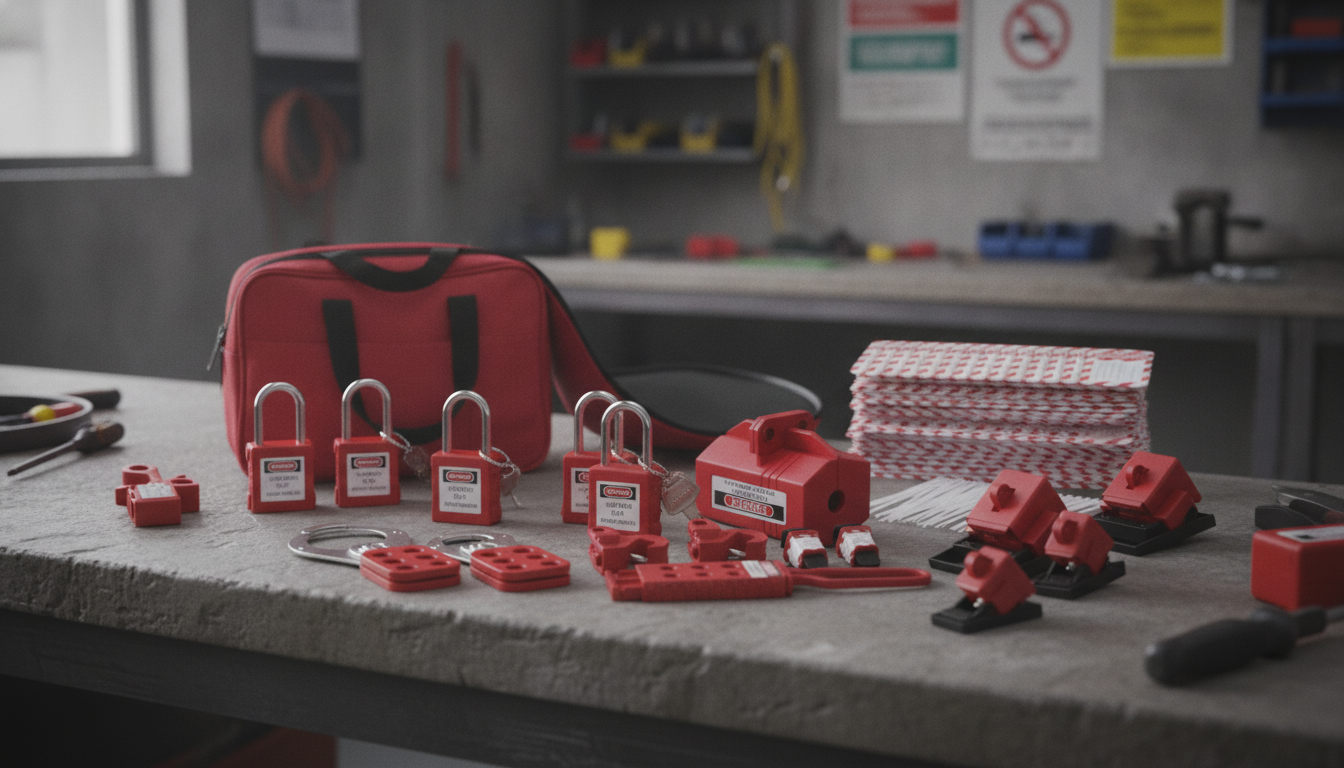
Electrical Lockout/Tagout Control That Stays Organized
A lockout/tagout (LOTO) kit helps prevent unexpected energization during maintenance by securing electrical isolation points and clearly communicating that equipment must not be operated. A well-built, portable kit also reduces the temptation to improvise with the wrong device or skip tagging steps when work orders pile up. The Electrical Lockout Tagout Kit – 47-Piece Complete Safety Set is designed for fast, organized control of common electrical lockout needs in facilities, maintenance departments, and contractor tool bags.
LOTO devices support a safety program—procedures, training, and verification practices remain essential. For regulatory and best-practice context, see OSHA 29 CFR 1910.147 and NFPA 70E.
What a Lockout/Tagout Kit Is Used For
- Helps isolate electrical energy sources before servicing or troubleshooting equipment.
- Supports consistent use of locks, tags, and lockout devices across teams and shifts.
- Reduces reliance on improvised solutions by keeping essential items together.
- Useful for panels, disconnects, breakers, plugs, and other electrical isolation points (depending on device compatibility).
When devices are standardized and stored together, technicians spend less time hunting for the right piece and more time following the same energy control steps every time—especially important during call-outs, outages, or multi-trade work.
What’s Included in the 47-Piece Set
This 47-piece assortment is built around typical electrical isolation scenarios found in commercial and industrial settings. It combines lockout devices, identification tags, and storage so equipment can be isolated, labeled, and controlled without delays.
- A mix of lockout devices intended to cover common electrical isolation scenarios.
- Locks and tags for clear identification and controlled access during work.
- A portable case/pouch for storage and rapid deployment on jobs.
- Designed to support routine maintenance workflows and safety procedures.
Typical Kit Components and How They’re Used
| Component Type | Primary Purpose | Where It’s Commonly Applied |
|---|---|---|
| Safety padlocks | Prevents re-energization by keeping isolation points secured | Lockout hasps, breaker devices, lockout boxes (where applicable) |
| Lockout tags | Communicates who locked it out and why | Panels, disconnect points, equipment controls |
| Circuit breaker lockout devices | Physically blocks breaker switching | Single-pole and multi-pole breakers (compatibility varies) |
| Hasps / multi-lock accessories | Allows multiple workers to apply personal locks | Group maintenance tasks, shift changes |
| Cable or universal-style devices | Flexible lockout for varied geometries | Handles, levers, odd-shaped controls (as permitted by procedure) |
| Carry case | Keeps items organized and reduces lost components | Tool crib, maintenance cart, contractor kit |
Where This Kit Fits Best
- Maintenance teams needing a ready-to-go assortment for electrical isolation work orders.
- Small-to-mid facilities building a standardized lockout setup for multiple technicians.
- Contractors who move between sites and want one consolidated set.
- Training environments for demonstrating correct device selection and tagging discipline.
For many shops, the value is less about a single device and more about reducing friction: technicians can grab one pouch, complete the isolation and tagging steps, and keep work moving without compromising control.
How to Use an Electrical Lockout/Tagout Kit Safely
- Prepare: identify all energy sources (including backfeed, stored energy, and secondary supplies).
- Notify: affected employees and follow site-specific lockout procedures.
- Shut down and isolate: stop equipment using normal controls, then isolate electrical sources.
- Apply devices: install the correct lockout device, then place a personal lock and legible tag.
- Verify zero energy: attempt start (as allowed), test with approved meters, and confirm isolation.
- Perform the work: maintain control of keys and ensure each person uses their own lock.
- Restore safely: remove lockout/tagout only after inspection, reassembly, and proper communication.
Verification is the step that often separates “locked out” from “safe.” Treat meters, test leads, and test points as part of the job plan—especially where multiple feeds, control transformers, or capacitive storage are present.
Choosing the Right Devices for Common Electrical Scenarios
- Circuit breakers: match the device to breaker type and handle geometry; verify fit before relying on it.
- Plug lockout: confirm the plug and cord diameter fit the lockout shell (if using plug devices).
- Disconnect switches: ensure the device can prevent handle movement and accept the required number of locks.
- Group work: use hasps or group lockout methods so each worker maintains personal control.
- Tag quality: use durable, legible tags and a consistent information format for accountability.
Compatibility checks matter. A lockout device that “almost fits” can create a false sense of security—confirm it physically blocks operation and accepts the necessary lock shackle diameter(s) required by your facility’s standard.
Care, Storage, and Program Tips
- Keep the kit in a known location (tool crib, maintenance cabinet, or on a service cart) and check it out like calibrated tools.
- Inspect devices periodically for cracks, worn jaws, faded tags, or missing components.
- Standardize colors and tag fields (name, date, contact, reason) to improve recognition and compliance.
- Replace tags and markers regularly; poor legibility undermines the entire control step.
- Align usage with documented procedures, authorized employee training, and verification practices.
Featured Products (In Stock)
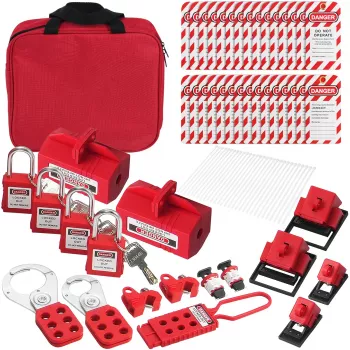
- Electrical Lockout Tagout Kit – 47-Piece Complete Safety Set
- Black Cat Reflective Laser Phone Case for iPhone
- Platinum Men’s Ring with Moissanite Diamond
FAQ
Does a lockout/tagout kit replace the need for a written lockout procedure?
No. The devices support an energy control program, but written procedures, authorized employee training, and documented verification steps are still required to meet typical OSHA expectations and to ensure consistent execution.
Can multiple technicians lock out the same equipment at the same time?
Yes. Use a lockout hasp or an approved group lockout method so each technician applies their own personal lock and keeps their own key, maintaining individual control until their portion of the work is complete.
How is zero energy verified for electrical work?
Zero energy is verified by confirming isolation and testing with an appropriately rated meter at the correct points, and by attempting start where permitted by procedure. Stored or residual energy must also be addressed before work begins.















Leave a comment