5-Piece Silicone Baby Feeding Set: Suction & Sippy Cup
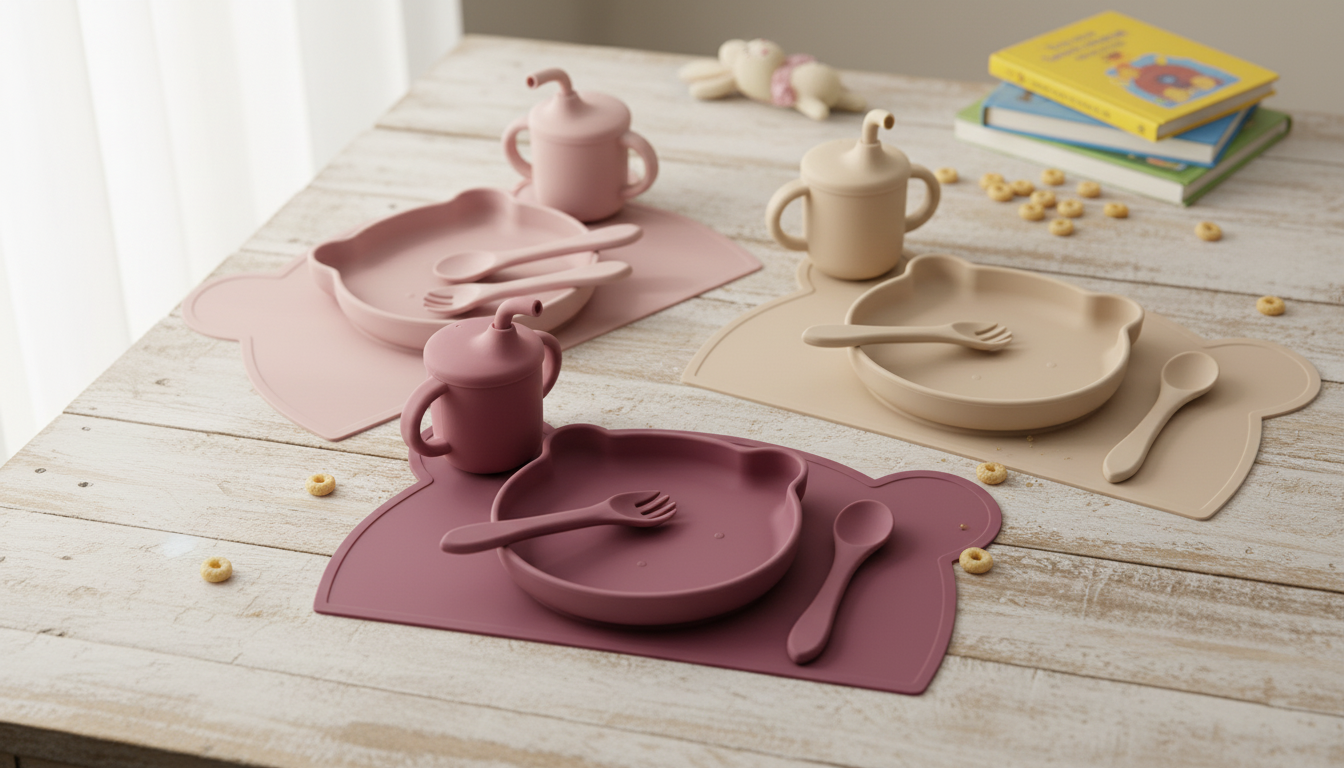
5-Piece Silicone Baby Feeding Set with Suction Dishes & Sippy Cup: A Practical Mealtime Starter Kit
Early self-feeding can be messy, frustrating, and surprisingly hard on tableware. A well-designed silicone set can reduce spills, keep dishes in place, and give little hands tools that are easier to grip. This 5-piece silicone baby feeding set pairs suction dishes with a sippy cup to support everyday meals at home or on the go, while keeping cleanup simple.
What’s Included in a 5-Piece Silicone Feeding Set
A starter feeding kit usually covers the basics needed for the transition from purees to finger foods and early utensil practice. In a typical 5-piece silicone feeding set, each item plays a specific role in helping babies build independence while helping caregivers keep mess manageable.
- Suction plate or dish: Helpful once finger foods enter the mix, keeping snacks and soft solids in place.
- Suction bowl or second dish: Great for oatmeal, yogurt, and purees where scooping practice begins.
- Baby utensil(s): Short handles and soft silicone can feel easier for early grips and hand-to-mouth coordination.
- Sippy cup: Supports the move from bottle to cup with a more controlled drinking experience.
- Extra accessory: Often a spare utensil or matching dish for quick swaps or travel.
Suction-based dishes are especially useful during the “plate tossing” stage because they reduce sliding and tipping. Silicone is also popular for baby feeding because it’s flexible and naturally grippy, and it’s often quick to hand-wash compared with rigid materials that have sharper corners or seams.
When your set arrives, confirm the piece count, check suction surfaces for smooth, even contact, and inspect edges for consistent molding (no rough spots or thin, uneven rims).
Set Pieces and Everyday Uses
| Piece | Best for | Why it helps |
|---|---|---|
| Suction dish/plate | Finger foods, snacks, soft solids | Stays put to reduce spills and tipping |
| Suction bowl or second dish | Purees, oatmeal, yogurt | Supports scooping practice with less sliding |
| Baby utensil(s) | Early spoon/fork practice | Short, easy-to-hold shape encourages self-feeding |
| Sippy cup | Water and milk transitions | Helps move from bottle to cup with controlled flow |
| Extra accessory (varies by set) | Backup utensil or matching dish | Convenient spare for daycare, travel, or quick swaps |
How Suction Dishes Perform on Different Surfaces
Suction can be a game-changer, but it’s not “one surface fits all.” The best hold typically happens on smooth, non-porous surfaces like glass, sealed wood, polished plastic, or a highchair tray. For the strongest seal, wipe both the tabletop and the suction base to remove invisible crumbs and dust.
Textured or porous tables can reduce suction because tiny gaps let air in. If your table has grain, grooves, or a matte finish, try placing the dish on a smooth placemat or a flat tray first. A simple real-world test: press firmly from the center outward, then tug lightly at the edge. If it lifts too easily, re-seat and try again after wiping the area.
For removal, lift a tab or edge slowly rather than yanking upward. That helps avoid sudden “release-and-splash” moments when there’s liquid or puree inside.
Sippy Cup Comfort, Flow, and Transition Support
A sippy cup often serves as a bridge between bottle feeding and open-cup practice. The goal is a manageable flow rate and a cup shape that feels stable in small hands. Caregivers commonly prioritize a comfortable grip, a base that doesn’t tip easily, and parts that come apart without a struggle for thorough rinsing.
To reduce leaks, make sure every component is fully seated and aligned, and avoid overfilling (especially during travel). Testing with water first can save a lot of frustration. For milk, rinse promptly after use, wash with warm soapy water, and air-dry completely to minimize odor buildup.
For more feeding guidance as solids are introduced, the American Academy of Pediatrics offers practical tips on timing and progression at HealthyChildren.org.
Safety and Material Checks That Matter
When shopping for baby feeding gear, look for clear labeling and care instructions that match common caregiver concerns: food-contact suitability, straightforward material descriptions, and an easy-to-follow cleaning routine. For background on how food-contact materials are regulated, the FDA provides an overview of food contact substances at fda.gov.
For everyday use, it’s generally wise to avoid serving very hot foods directly into silicone for extended periods unless the product guidance says it’s appropriate; letting foods cool a bit first can be a simple precaution. Over time, inspect pieces for tears, deep bite marks, or compromised edges. If the silicone looks damaged or feels sticky/tacky after cleaning, it may be time to replace that piece.
Care, Stain Prevention, and Long-Term Use
For general infant and toddler nutrition guidance, the CDC’s resources are a helpful reference: CDC Infant and Toddler Nutrition.
Who This Set Fits Best
Quick Setup Checklist for Smoother Meals
Featured In-Stock Picks
- 5-Piece Silicone Baby Feeding Set with Suction Dishes & Sippy Cup ($35.51)
- Black Cat Reflective Laser Phone Case for iPhone ($5.01) (a handy add-on for caregivers whose phones are often within reach during messy meals)
FAQ
Do suction dishes work on textured tables?
Suction performs best on smooth, non-porous surfaces. On textured wood or porous finishes, use a smooth tray or placemat and wipe both surfaces clean before pressing down to improve the seal.
How can a silicone sippy cup be cleaned to prevent lingering milk odor?
Rinse immediately after milk, wash all parts with warm soapy water, and let everything fully air-dry before storage. If odor lingers, an occasional baking-soda soak can help freshen silicone.
What foods are most likely to stain silicone dishes?
Common culprits include tomato sauce, carrots, turmeric, and dark berries. Prompt rinsing helps reduce staining, and discoloration is usually cosmetic rather than a sign the dish isn’t usable.













Leave a comment