Folding Outdoor Camping Cart: Smooth Hauls Anywhere
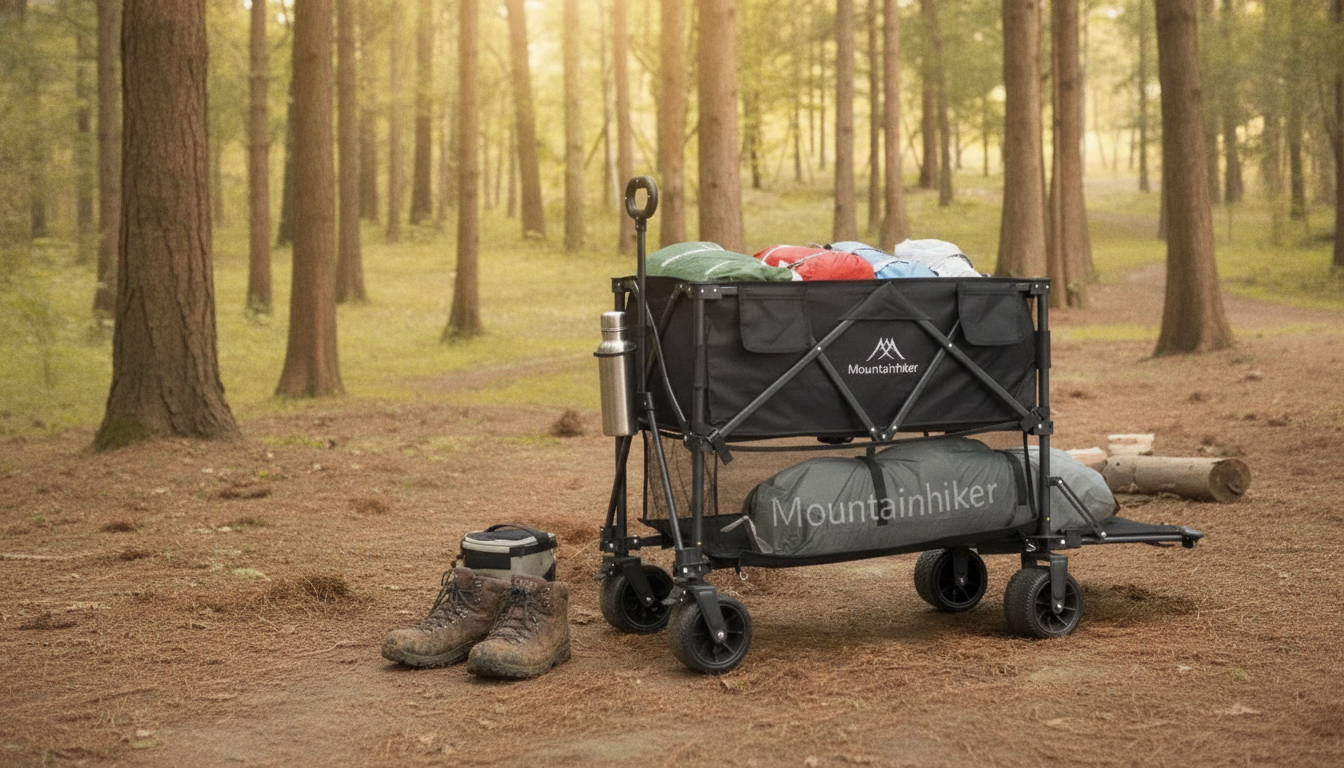
Folding Outdoor Camping Cart for Hauling Gear, Coolers, and Camp Essentials
A folding camping cart cuts down the back-and-forth between your car and wherever the day is happening—campsite, beach access, tailgate spot, or a packed parking lot. With the right setup, heavy loads stay stable, the cart rolls smoothly over mixed terrain, and everything packs down fast when it’s time to move. For more guidance, see All-Terrain Beach Wagon with 10″ x 3.5″ Big Inflatable ….
When a folding cart makes the biggest difference
- Car camping: Move totes, water jugs, kitchen boxes, and bedding in one run, instead of juggling awkward loads from trunk to tent pad.
- Beach days: A cart with wider wheels generally handles soft sand better; if your cart uses inflatable tires, lower pressure can increase “float” and reduce sinking.
- Sports fields and festivals: Carry chairs, canopies, and coolers without shoulder strain—especially across long walks from distant parking.
- Gardens and yard work: Transport mulch bags, tools, and plants while keeping hands free for gates and doors.
- Apartment-to-car loading: Simplify elevator and parking-lot transitions when you’re moving multiple bins at once.
Key features that affect real-world performance
Two carts can look similar online and feel totally different in use. The details below make the difference between a smooth pull and a wobbly, frustrating haul. For further reading, see Collapsible Wagon.
- Frame and joints: Sturdy metal supports and reinforced folding hinges help prevent wobble under load.
- Cargo bed and fabric: Dense, tear-resistant fabric plus a removable base plate can reduce sagging—especially under coolers and water containers.
- Handle design: Telescoping pull handles should lock firmly. A padded grip is a comfort upgrade on longer walks.
- Wheel type: Wider wheels can “float” better on sand and soft soil, while narrower wheels tend to roll efficiently on pavement.
- Brakes or wheel locks: Helpful on slopes, ramps, and uneven parking lots where a loaded cart can drift.
- Storage extras: Side pockets, cup holders, bungee points, and integrated straps help secure odd-shaped items and keep small essentials easy to grab.
Feature checklist and what it improves
| Feature | Why it matters | Good sign to look for |
|---|---|---|
| Wide wheels | Helps prevent sinking on sand and soft ground | Wider tread and stable axle |
| Locking handle | Reduces sudden collapses while pulling | Positive lock/click and minimal play |
| Reinforced floor | Stops heavy coolers from bowing the base | Rigid base insert or strong crossbars |
| Wheel locks/brakes | Prevents rolling on slopes | Easy-to-reach brake lever or lock |
| Tie-down points | Keeps loads from shifting | Loops, D-rings, or elastic cord points |
How to match the cart to your terrain and load
- For sand and loose soil: Prioritize wider wheels and a stable, low center of gravity. Pack low and avoid stacking high, since top-heavy loads dig wheels deeper.
- For gravel and trails: Look for wheels that can absorb vibration and a frame that won’t flex under jolts. Tight joints and a rigid base help keep the cart tracking straight.
- For sidewalks and parking lots: Smooth rolling and maneuverability matter more than extreme traction. A responsive handle and stable turning can make crowded walkways easier.
- For heavy coolers: Focus on base support, stated weight capacity (confirm on the product page), and tie-down points so the cooler doesn’t creep or tilt.
- For bulky but light gear: Cargo volume and higher sidewalls can matter more than maximum load rating—think sleeping bags, folding chairs, and canopy walls.
If you’re building a load plan for a longer trip, it can also help to cross-check a proven packing list like REI’s Camping Checklist so essentials don’t end up buried under the heaviest items.
Setup, folding, and packing tips
- Open fully on flat ground: Extend the frame until it locks. Partial extension can create twist under load, especially when turning.
- Load heavy items first: Keep weight low and centered. Put lighter, crushable items (towels, jackets) on top.
- Strap tall or shifting loads: Chairs, firewood bundles, and water jugs can shift as wheels bump over uneven ground—straps reduce tip risk.
- Brush off sand and grit before folding: Clearing hinge areas and wheel hubs helps the mechanism stay smooth over time.
- Pack smart in the vehicle: Store the folded cart where it won’t be crushed by hard bins or heavy coolers; long-term hinge pressure can lead to misalignment.
Care and maintenance for longer service life
Safety and stability on slopes and uneven ground
Product options available now
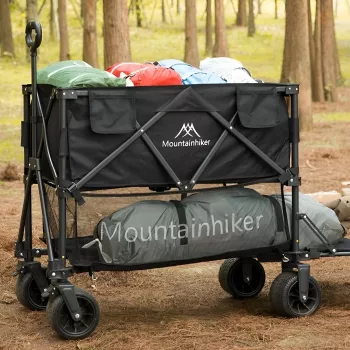
- Folding Outdoor Camping Cart — Designed to fold down for storage and quick transport in a trunk, RV bay, or garage; useful for moving camp kitchen bins, coolers, water containers, chairs, and canopy gear in fewer trips. Check the product page for current load rating, dimensions, and wheel details before planning heavy-duty use.
- Black Cat Reflective Laser Phone Case for iPhone — A handy add-on for busy campgrounds or evening walks back from events, helping your phone stay protected and easier to spot in low light.
- Electrical Lockout Tagout Kit – 47-Piece Complete Safety Set — Useful for organizing safe maintenance around a garage, workshop, or equipment area when you want clear labeling and lockout control during repairs.
FAQ
Can a folding camping cart handle sand at the beach?
It can, but performance depends on wheel width and how the load is packed. Keep weight low and centered, reduce load height, and expect slower pulling in soft sand.
How should a cart be loaded to prevent tipping?
Place the heaviest items on the bottom and centered over the axle, strap tall items, and avoid stacking above the sidewalls—especially on slopes or uneven ground.
What maintenance helps folding carts last longer?
Rinse off sand and salt, dry before storage, check wheel hardware for looseness, inspect fabric seams, and keep hinges clear of grit to prevent binding.













Leave a comment