Cottagecore vs Grandmacore: Quick Visual Style Checklist
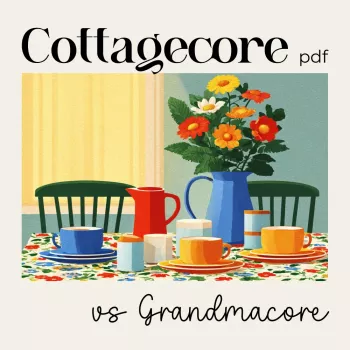
Cottagecore vs Grandmacore: A Pocket Visual Checklist for Instant Style ID
Cottagecore and grandmacore share cozy textures, nostalgic details, and a love of “homey” charm—but they signal different stories at a glance. When you’re evaluating an outfit, a room vignette, a thrift find, or a mood board, a simple pocket checklist makes it easier to name what you’re seeing fast (and to style it more intentionally). For more guidance, see Grandmacore Fashion: The Complete Style Guide.
Both aesthetics pull from vintage life and softness, but their “center of gravity” differs: cottagecore leans outdoors and pastoral; grandmacore leans indoors and heritage comfort. If you’ve ever looked at florals and lace and thought, “Which one is this?” the sections below break it down in a quick, visual way.
At-a-Glance Definitions
- Cottagecore: pastoral romance—garden walks, countryside simplicity, handmade practicality, and nature-forward details. (Reference: Cottagecore overview)
- Grandmacore: heritage comfort—lived-in domestic warmth, heirloom patterns, vintage household objects, and “Sunday best” coziness. (Trend context: Vogue on grandmacore/grandpacore)
- Where they overlap: florals, doilies, soft lighting, thrifted pieces, and a preference for comforting, slower-feeling spaces.
- Fast tell: cottagecore points to rural/outdoor life; grandmacore points to home history and indoor rituals.
Quick Visual ID Checklist (tick what you see most)
| Visual cue | If it dominates, it reads as cottagecore | If it dominates, it reads as grandmacore |
|---|---|---|
| Setting vibe | Countryside, garden, meadow, farm kitchen, open air | Parlor, sitting room, formal dining, cozy living room |
| Color story | Sun-washed creams, sage, butter yellow, sky blue | Warm neutrals, dusty rose, burgundy, deeper browns |
| Pattern focus | Ditsy florals, gingham, botanical prints | Large florals, tapestry motifs, classic stripes, patchwork |
| Materials & textures | Linen, cotton, muslin, straw, raw wood | Crochet, quilted fabrics, lace, velvet accents, polished wood |
| Signature objects | Baskets, picnic items, pressed flowers, canning jars | Tea sets, doilies, porcelain figurines, framed family photos |
| Silhouette & styling | Prairie dresses, pinafores, smocking, apron details | Cardigans, knitted vests, classic blouses, sensible layers |
| Footwear signal | Mary Janes, clogs, lace-up boots, flats for walking paths | Loafers, classic pumps/low heels, house slippers, vintage shoes |
| Narrative cue | Foraging, baking bread, gardening, countryside crafts | Hosting tea, needlework, heirlooms, cozy routines |
The “Story Test”: What’s the Scene?
If two looks share florals and vintage touches, the fastest way to sort them is to imagine the “still frame” as a scene in a movie. What’s happening just outside the crop?
- Cottagecore scene cues: fresh-picked flowers on the counter, a windowsill herb garden, sun coming through linen curtains, a basket by the door.
- Grandmacore scene cues: a well-loved armchair, layered throws, a tea tray, porcelain accents, framed art with traditional subjects.
- Rule of thumb: if the environment feels like “outside coming in,” it usually leans cottagecore; if it feels like “home history preserved,” it usually leans grandmacore.
- When mixed: decide by the dominant prop—garden tools and baskets push cottagecore; teacups, doilies, and heirloom decor push grandmacore.
Pattern, Print, and Texture Signals
Patterns can overlap, so focus on scale and texture “weight.” Cottagecore reads lighter, airier, and more practical; grandmacore reads richer, layered, and more heirloom-coded.
- Cottagecore patterns: small-scale florals, gingham, delicate botanicals, embroidery that looks handmade and slightly rustic.
- Grandmacore patterns: larger florals, ornate tapestry-inspired designs, patchwork quilts, lace that reads “heirloom” rather than “countryside.”
- Texture tells: linen and airy cotton feel cottagecore; crochet blankets, quilted layers, and polished vintage textiles feel grandmacore.
- Quick sorting trick: if the texture suggests outdoor practicality (straw, canvas, linen), lean cottagecore; if it suggests indoor comfort (crochet, quilt, velvet), lean grandmacore.
Wardrobe Clues: Silhouette, Accessories, and Styling
Outfits often “announce” their aesthetic through shape first, then accessories second. If you’re stuck, ignore the print and look at what the outfit seems designed to do.
- Cottagecore silhouettes: prairie dresses, puff sleeves, smocked bodices, pinafores, aprons-as-fashion, hair ribbons, straw hats.
- Grandmacore silhouettes: cardigans, sweater sets, longer skirts with classic tailoring, collared blouses, sensible knit layers, brooches and pearls.
- Accessory cues: cottagecore favors baskets, floral scarves, and nature motifs; grandmacore favors structured handbags, vintage jewelry, and heirloom accessories.
- One-line test: if the outfit looks ready for a garden walk, it’s likely cottagecore; if it looks ready to host tea or sit by a lamp with a book, it’s likely grandmacore.
Room Styling Clues: Decor, Lighting, and Objects
Room styling is where the two aesthetics separate most clearly. Cottagecore often feels “collected for living” (jars, baskets, greenery), while grandmacore feels “kept for remembering” (heirlooms, china, framed family history).
Mixed Aesthetic? Use the 3-Point Tiebreaker
Pocket Reference: Printable Checklist for Quick Visual ID
Pocket checklist printable for spotting cottagecore vs grandmacore is designed as a quick visual cheat sheet you can keep on your phone or print as a small card.
- Black Cat Reflective Laser Phone Case for iPhone (a playful, modern accent that can skew whimsical when paired with soft knits or florals)
- Platinum Men’s Ring with Moissanite Diamond (a polished heirloom-leaning detail that fits grandmacore’s “classic jewelry” angle)
FAQ
Can cottagecore and grandmacore be combined without looking mismatched?
Yes—choose one as the base (setting plus color palette), then add a few accents from the other. Keep patterns consistent in scale, and limit “signature objects” so the scene doesn’t compete (for example, pick either baskets or a tea set as the main focal point).
What’s the fastest way to tell cottagecore from grandmacore in a single photo?
Check the setting and the hero object first. Garden, baskets, and botanical cues lean cottagecore; tea sets, doilies, and heirloom decor cues lean grandmacore.
Are florals always cottagecore?
No—florals appear in both. Small ditsy florals on airy fabrics often read cottagecore, while larger traditional florals paired with layered heirloom textures often read grandmacore.











Leave a comment