Vintage USB Condenser Mic: Clear Desk Audio for Streams

Vintage-Style USB Condenser Microphone for Desktop Streaming & Recording: Clear Voice With Classic Looks
A desktop microphone should deliver clean, natural voice while fitting neatly into a streaming or recording setup. A vintage-style USB condenser model combines plug-and-play convenience with a timeless design that looks at home on camera, on a work desk, or beside a laptop—without requiring an audio interface. The result is a simple path to clearer speech for streaming, meetings, and narration, with a look that adds personality to the frame. For more guidance, see Can you recommend a good quality USB mic for Audacity.
Who This Microphone Suits Best
- Live streamers who want a polished on-camera aesthetic without extra studio gear
- Podcasters and voice-over creators needing clear speech capture at close range
- Remote workers upgrading from headset mics for meetings and webinars
- Creators recording narration, tutorials, and short-form videos at a desk
- Students and educators recording lectures, lessons, and presentations
What “USB Condenser” Means for Desktop Recording
“Condenser” refers to the microphone capsule type. Condenser capsules are known for capturing vocal detail and subtle articulation—especially when you’re close to the mic—making them a natural fit for spoken-word audio. “USB” means the microphone connects directly to a computer and typically handles both power and audio data through one cable. For further reading, see Usb Microphone Sennheiser Recording Mic ….
- Condenser capsules are designed to capture vocal nuance at short distances.
- A USB connection usually powers the mic and carries audio to your computer in one step.
- Built-in analog-to-digital conversion sends a digital signal directly to your computer, avoiding an external interface for most setups.
- Better sound comes from smart distance and positioning—not from cranking input gain to compensate for being too far away.
For a deeper look at technique—especially distance and the proximity effect—Shure’s guide is a helpful reference: https://www.shure.com/en-US/performance-production/louder/microphone-technique.
Vintage Design Benefits Beyond Looks
A retro-inspired microphone does more than match a certain vibe. On camera, it can act like a “set piece” that makes a stream or podcast shot feel intentional. Off camera, a stable desktop form factor encourages consistent placement, which is one of the easiest ways to keep your sound consistent from session to session.
- Camera-friendly styling can elevate the visual identity of a streaming or podcast setup.
- Vintage styling often pairs well with warm lighting, retro desk accessories, and minimalist backgrounds.
- A stable desktop mic reduces handling noise compared with handheld recording.
- Consistent placement helps keep voice tone and volume more even across sessions.
Sound Quality Priorities for Speech and Streaming
For spoken-word audio, “good sound” is mostly about intelligibility and control. A clean recording doesn’t need to be overly processed; it needs to be easy to understand, comfortable to listen to, and predictable in volume.
- Clarity: consonants that cut through without sounding brittle or harsh.
- Noise control: keeping keyboard clicks, room noise, and PC fans from competing with your voice.
- Plosive management: reducing “p” and “b” blasts using distance, angle, and (ideally) a pop filter.
- Consistency: stable levels that don’t jump when you slightly turn your head.
- Monitoring: if the mic supports low-latency monitoring, it helps maintain a steady speaking volume.
Adobe also shares practical recording tips that apply well to desktop setups, including reducing noise and improving clarity: https://www.adobe.com/creativecloud/video/discover/audio-recording.html.
Placement and Room Setup That Makes the Biggest Difference
Small adjustments to placement and room treatment often improve quality more than any software setting. The goal is to get your voice louder than the room, louder than the desk, and louder than the computer—without clipping.
Quick Setup Checklist
| Step | Goal | Tip |
|---|---|---|
| Distance | Natural voice tone | Start 6–10 inches; move closer for more fullness |
| Angle | Less plosive/breath noise | Aim slightly to the side of the mouth |
| Environment | Lower room echo | Add soft materials nearby (curtains/rug) |
| Gain/Levels | Clean signal without clipping | Keep peaks below the red/clipping zone |
| Noise Sources | Reduce background sound | Turn off unused fans; keep mic away from keyboard |
Using It With Streaming, Podcast, and Meeting Apps
Care, Handling, and Long-Term Reliability
Product Spotlight: Vintage Style USB Condenser Microphone for Desktop Streaming & Recording
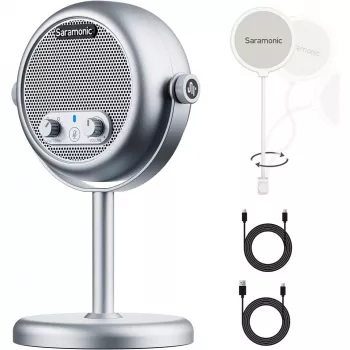
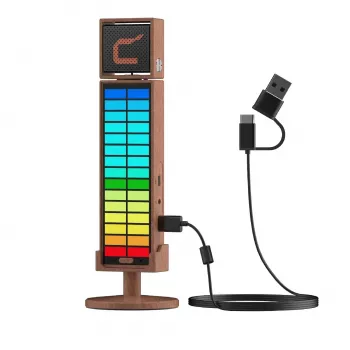
The Vintage Style USB Condenser Microphone for Desktop Streaming & Recording is built for desktop voice capture with a classic on-camera presence. USB connectivity keeps setup straightforward for streaming, recording, and calls, making it a practical upgrade from built-in laptop microphones—especially when paired with good placement, stable levels, and a slightly softened room.
At a Glance
| Item | Details |
|---|---|
| Name | Vintage Style USB Condenser Microphone for Desktop Streaming & Recording |
| Price | 264.51 USD |
| Availability | In stock |
| Product page | View product |
More In-Stock Picks to Round Out Your Desk
- Black Cat Reflective Laser Phone Case for iPhone (in stock)
- Platinum Men’s Ring with Moissanite Diamond (in stock)
FAQ
Does a USB condenser microphone need an audio interface or phantom power?
No. Most USB microphones include their own power and built-in digital conversion, so they plug directly into a computer without a separate interface or 48V phantom power. Phantom power is typically relevant to traditional XLR condenser microphones, not USB models.
How far should the microphone be from the mouth for streaming or voice-over?
A practical starting point is about 6–10 inches. Speak slightly off-axis and consider a pop filter to reduce plosives while keeping a full, present tone.
Why does my voice sound echoey or distant on a desktop mic?
This usually happens when the mic is too far away, the input gain is turned up to compensate, or the room is reflective. Move the mic closer, lower the gain, and add soft materials (curtains, rugs, or a panel) to reduce reflections.












Leave a comment